

Students receive rigorous training on scientific and practical knowledge and skills in major branches of the civil engineering discipline and develop highly valuable cutting-edge research experience and industry-approved advanced expertise in technology-enhanced infrastructure.
Civil Engineering
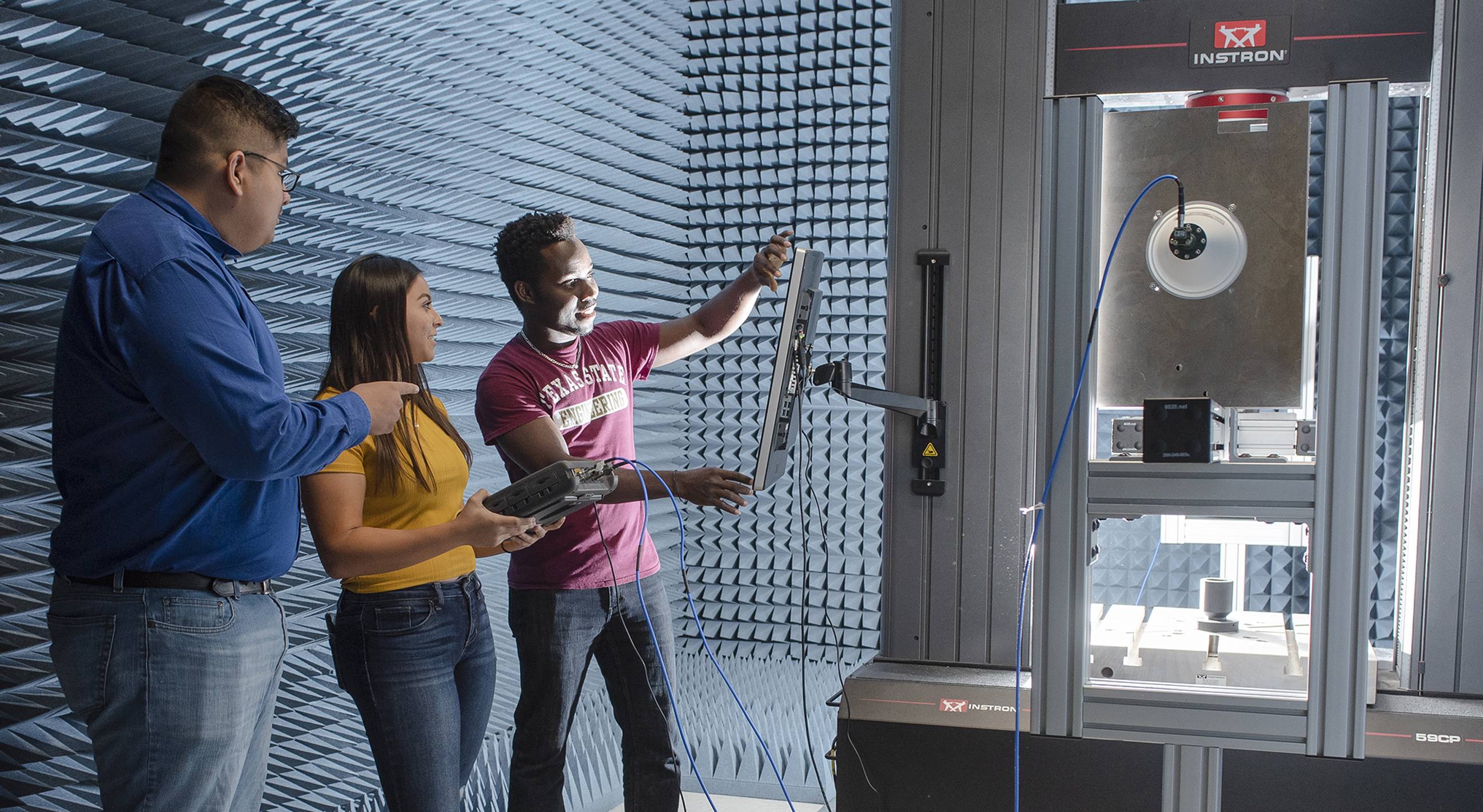
Program Overview
The master of science in civil engineering emphasizes innovation, entrepreneurship, and advanced technical communication for the development of modern, technology-enhanced infrastructure systems. The program is built around six sub-disciplinary areas: environmental, geotechnical, materials, structural, transportation, and water resources engineering. Through well-defined thesis and non-thesis pathways, students gain depth in one or more of these areas while learning to address complex infrastructure challenges from technical, societal, and economic perspectives. The program prepares graduates to excel in diverse career paths, including professional practice, consulting, infrastructure innovation, entrepreneurship, and research-oriented roles in industry, government, and academia.
Course Work
Students complete core coursework in civil engineering, including a required seminar, along with elective courses selected from civil engineering and related graduate fields. The program offers both thesis and non-thesis options. The program provides advanced study opportunities across six major civil engineering disciplines: environmental, geotechnical, materials, structural, transportation, and water resources engineering. Depending on the option selected, the culminating activity is either a thesis or an oral comprehensive examination based on a project in the student’s civil engineering sub-disciplinary area. A minimum of 31 semester credit hours is required for the completion of the program. Graduates develop advanced knowledge in civil engineering contents, the ability to apply the knowledge to professional and research problems, and the preparation needed for advanced practice or further scholarly work across key areas of civil engineering
| Degree | Hours | Thesis Option | Location |
|---|---|---|---|
Degree M.S. | Hours 31 | Thesis Option Thesis | Location San Marcos |
Degree M.S. | Hours 31 | Thesis Option Non-thesis | Location San Marcos |
Program Details
This program allows students to develop advanced training and knowledge in six subareas of civil engineering, including environmental, geotechnical, materials, structural, transportation, and water resources engineering, as well as engineering research methods, professional communications, and applications of quantitative and qualitative analysis to civil infrastructure problems. Thesis and non-thesis pathways support diverse career goals and prepare graduates for leadership roles in research, consulting, industry, government agencies, start-ups, and other sectors. Renowned faculty and industry partnerships provide students with funded research opportunity, professional growth, and real-world engineering experience.
Program Mission
The program prioritizes research, innovation, leadership, teamwork, and advanced communications in modern infrastructure. Its educational objectives are to equip graduates with:
- applied technical knowledge across key civil engineering areas, including environmental, geotechnical, materials, structural, transportation, and water resources engineering
- skills for contributing to cutting‑edge research that advances the state of the art in civil engineering practice
- leadership, innovation, and collaboration abilities that prepare students to address complex infrastructure challenges as part of multidisciplinary teams in industry, government, and other professional settings
Career Options
The program offers both thesis and non-thesis pathways to support diverse career goals. The thesis option combines advanced coursework with rigorous research training, preparing graduates for doctoral programs, academic careers, and advanced professional roles in industry and government. The non-thesis option emphasizes advanced professional practice while fostering innovation, communication, and entrepreneurship in infrastructure systems. Together, these pathways prepare graduates for leadership roles in research, consulting, industry, government agencies, start-ups, and other sectors, while equipping them to address complex infrastructure challenges through technical expertise, creativity, and innovation.
Program Faculty
Civil engineering faculty conduct research in environmental, geotechnical, materials, structural, transportation, and water resources engineering. Graduate students have opportunities to participate in externally funded research projects supported by federal and state agencies, including the U.S. Department of Transportation, Texas Department of Transportation, U.S. Department of Energy, U.S. Environmental Protection Agency, U.S. Bureau of Reclamation, and the National Science Foundation. The program’s nationally and internationally recognized faculty, combined with strong partnerships with industry and public agencies, provide exceptional opportunities for funded research, professional development, and hands-on experience addressing real-world engineering challenges.
The civil engineering faculty research areas include but not limited to:
- AI applications in civil engineering
- hydrology and remote sensing
- infrastructure durability
- multifunctional materials and structures
- nature-inspired civil engineering
- high-performance infrastructure materials
- transportation geotechnics
- transportation safety and operations, and asset management
- water and waste-water treatment and management
Contact us for general questions about your application, funding opportunities, and more. If you have specific questions after reviewing the program details, contact the program's graduate advisor.

Already know that Texas State is right for you?
Application Deadlines
| DEADLINES | U.S. CITIZEN | INTERNATIONAL |
|---|---|---|
DEADLINES Fall - Priority | U.S. CITIZEN February 1 | INTERNATIONAL February 1 |
DEADLINES Fall - Standard | U.S. CITIZEN August 1 | INTERNATIONAL June 1 |
Priority Deadline: Ensures full consideration for admission and eligibility for certain funding opportunities, including scholarships, fellowships, and assistantships, and guarantees that your application will be considered in the initial review.
Standard Deadline: Represents the last day a complete application can be submitted, but does not guarantee admission consideration. After the priority deadline, applications are reviewed on a rolling, space-available basis until the program is full, at which point, applications will close.
For important information regarding deadlines and decision timelines, review the Graduate Admission Policies page.
Admission Requirements
The items required for admission consideration are listed below. Further details on individual requirements can be found on our admission policy page. Additional information for applicants with international credentials can be found on our international webpages.
-
Application
- completed online application
-
Application Fee
- $55 nonrefundable application fee, OR
- $90 nonrefundable application fee for applications with international credentials
-
Transcripts & GPA
- Baccalaureate degree in Civil Engineering, Environmental Engineering, or a closely related field from a regionally accredited university. (Non-U.S. degrees must be equivalent to a four-year U.S. Bachelor’s degree. In most cases, three-year degrees are not considered. Visit our International FAQs for more information.)
- A copy of an official transcript from each institution where course credit was granted.
- A 3.0 overall GPA or a 3.0 GPA in the last 60 hours of undergraduate course work (plus any completed graduate courses).
- Non-credit (leveling) course work may be required prior to admission into the program if the student lacks sufficient background course work. Any required leveling course work must be completed with grades of B or better prior to admission.
-
Test Scores
GRE
- Official GRE (general test only) with competitive scores in the verbal reasoning, quantitative reasoning, and writing sections will be required. Texas State University students are exempt from this requirement.
Approved English Proficiency Exam Scores
Applicants are required to submit an approved English proficiency exam score that meets the minimum program requirements below unless they have earned a bachelor’s degree or higher from a regionally accredited U.S. institution or the equivalent from a country on our exempt countries list.
- official TOEFL iBT scores required with a 78 overall if taken on or before January 21, 2026
- official TOEFL iBT scores required with a 4 overall if taken after January 21, 2026
- official PTE scores required with a 52 overall
- official IELTS (academic) scores required with a 6.5 overall and minimum individual module scores of 6.0
- official Duolingo scores required with a 110 overall
- official TOEFL Essentials scores required with an 8.5 overall
- official Texas State Intensive English Program score of 90% or higher in the highest-level course (level 5)
The institution does not offer admission if the scores above are not met.
-
Documents & Other Requirements
- resume/CV detailing prior work experience, research experience, awards, scholarships, and other related qualifications
- statement of purpose (two pages) conveying research interests, plans for graduate study, and professional aspirations
- two letters of recommendation from non-related individuals familiar with the student’s scholarly work and/or relevant work experience